

Ph.D. in Medicinal Chemistry and Molecular Pharmacology
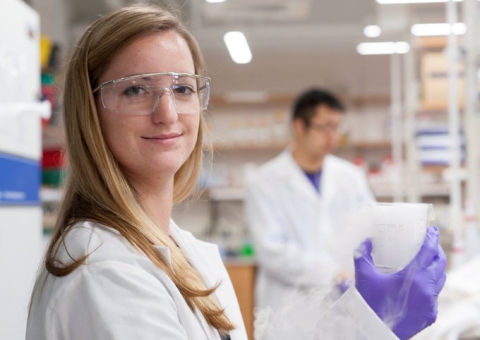
The Department of Medicinal Chemistry and Molecular Pharmacology (MCMP) is one of the top-rated programs in the country and is unique because it combines both medicinal chemistry and molecular pharmacology. Students in our PhD program will be trained in an environment that combines chemical and biological approaches, which is essential for translating basic discoveries into novel therapeutics. The scientific approaches taken by students and over 25 faculty in MCMP includes medicinal chemistry and chemical biology, cell and molecular biology, molecular pharmacology, biophysical and computational chemistry, systems biology, functional and pharmacogenomics. Biomedical research topics covered in MCMP can be broadly grouped in three general areas: cancer biology, neuroscience, and infectious diseases.
Our Ph.D. program is fully committed to excellence and innovation in the education of Ph.D. students. We are an inclusive and supportive environment, filled with energetic and creative students, fellows, faculty, and staff. Explore our faculty pages and contact us if you are interested in graduate studies and our Ph.D. program.
The MCMP Graduate Program
- Multidisciplinary Drug Discovery
- Molecular Pharmacology
- Biophysical and Computational Chemistry
- Functional Genomics and Pharmacogenomics
- Medicinal Chemistry and Chemical Biology
- Structural Biology
- Systems Biology
- #7 Pharmacy and #5 Most innovative - US News & World report 2020
- Top 10 Pharmacology in USA - QS rankings 2019
- Top 10 US Public University - The Wall Street Journal, 2020
- 5 consecutive years of Purdue University record research funding
- #13 Worldwide for US Patents - National Academy of Inventors, 2020
We have a world-class reputation for equipping young investigators with the skills andknowledge needed to be successful researchers in the pharmaceutical sciences. Graduate students play an integral role in accomplishing our research mission, and the rich scientific environment that exists in the department can be largely attributed to the outstanding quality of students admitted to the Ph.D. program. Indeed, a number of graduate students in the department have received extramural awards from agencies such as NIH, NSF, and the PhRMA Foundation.
Only students seeking a Ph.D. are admitted to the MCMP graduate program. Two-thirds of the graduate students in MCMP are admitted directly to the departmental graduate program, whereas the other third choose MCMP as their academic home after having entered graduate school through campus interdisciplinary training programs. There are currently over 80 graduate students enrolled in the department, the vast majority of whom are engaged in studies leading to the Ph.D. degree. The presence of approximately 30 postdoctoral associates and other research staff professionals further enriches the intellectual atmosphere.
Information on the Program
- Tabular time line of the program
- Policies and Regulations
- Detailed information on the application and admission processes
- Graduate students in the department are fully supported through various mechanisms including fellowships, research assistantships, and teaching assistantships. Further information on financing is available.
Graduate Program Information from the College of Pharmacy and the University
- Policies and Regulations Manual for Graduate Programs
- Graduate Pharmacy Programs - Useful information about graduate study in the College
- Graduate Pharmacy Program Admissions - Useful information and FAQ about admissions and application for graduate programs in the College
Contact Us
Need more information? Feel free to call us at 765-494-1362 or send an inquiry to mcmp-gradprog@purdue.edu.