

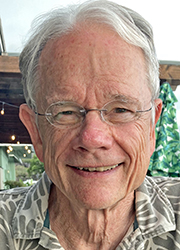
Ph.D. - 1973 - University of California Medical Center, San Francisco
Postdoc - 1973-75 - Massachusetts Institute of Technology
Our research group is engaged in the design and synthesis of a variety of molecules that interact with specific enzymes and membrane-bound receptors. This effort involves the integration of basic concepts in organic reaction mechanisms, synthetic organic chemistry, structural biology, biochemistry, computational chemistry, and pharmacology. At the present time, potential anticancer agents and antibiotics are being designed, synthesized, and tested.
In the anticancer drug development area, team members are focusing on novel indenoisoquinoline inhibitors of topoisomerase I. Work in this area has led to the synthesis of indenoisoquinolines containing amine side chains that confer exceptional potency as topoisomerase I inhibitors and as cytotoxic agents in human cancer cell cultures. Two indenoisoquinoline topoisomerase I inhibitors (LMP400 and LMP776) synthesized by the Cushman group have entered phase I clinical trials for treatment of cancer patients at the National Cancer Institute, and definite plans are being formulated to commence phase II clinical trials. The results of these clinical trials have been very promising, with no "show stoppers" involving bad ADME properties, lack of effects on biomarkers, or severe toxicities. In fact, the shrinkage of lung nodules in one cancer patient with colon cancer metastasis that was unresponsive to an array of established anticancer drugs, including irinotecan, after only one course of treatment with LMP400, is very encouraging. Recent work on the indenoisoquinolines has focused on synthesizing dual inhibitors of topoisomerase I and tyrosyl-DNA phosphodiesterase I. Since topoisomerase I inhibitors cause DNA breaks and tyrosyl-DNA phosphodiesterase I is involved in repairing them, the dual inhibitors my act synergistically to produce very potent anticancer activity. Strategies are also being investigated that are intended to target indenoisoquinolines specifically to prostate cancer cells and not normal cells in order to minimize undesirable systemic toxicity and improve efficacy.
Aromatase inhibitors are widely used in the treatment of breast cancer. However, they have significant side effects, including reduction in bone density leading to increase incidence of fractures, severe musculoskeletal pain leading to reduced patient compliance, and increase frequency of cardiovascular events. These undesirable effects are thought to be due to global estrogen depletion directly resulting from inhibition of aromatase. Cushman's research group is presently synthesizing aromatase inhibitors that also bind to estrogen receptors in normal cells and are designed to produce estrogenic effects in non-tumor tissues. The overall goal of this project is to design and synthesize compounds that inhibit estrogen production, block estrogen receptors in breast cancer cells, and stimulate estrogen receptors in normal cells. This is expected to result in an anticancer drug that would effectively treat breast cancer while greatly improving the quality of the lives of patients undergoing breast cancer chemotherapy.
Cancer prevention obviously offers distinct advantages over cancer treatment. A number of receptors that are involved in carcinogenesis are therefore being targeted by the Cushman group, including quinone reductases 1 and 2, NFΚB, retinoid X receptor, inducible nitric oxide synthase, the estrogen receptor, cyclooxygenases 1 and 2, MAPKs (p38 and Jun N-terminal kinase), and p21.
Board of Directors and Consultant, Gibson Oncology, LLC
Volunteer, West Side Food Pantry
Board of Trustees, Unitarian Universalist Church, West Lafayette
- MDCH 204, Organic Chemistry I
- MDCH 205, Organic Chemistry II
- MDCH 407, Medicinal Chemistry and Pharmacognosy I
- MDCH 408, Medicinal Chemistry and Pharmacognosy II
- MDCH 553, Intermediate Organic Medicinal Chemistry
- MDCH 600, Advanced Medicinal Chemistry
- MCMP 422, Immunology and Chemotherapy
- MCMP 570, Basic Principles of Chemical Action on Biological Systems
- MCMP 442, Chemotherapy of Infectious and Neoplastic Diseases
- MCMP 490, Remedial Organic Chemistry for Graduate Students
- MCMP 690, Biological Targets for Drug Discovery
- MCMP 625, Grant Writing
- IUSM 610, Basic Principles of Pharmacology and Toxicology I
- PHRM 840, Professional Program Laboratory III
- PHRM 865, Integrated Pharmacotherapy V
- MCMP 544, Drug Classes and Mechanisms
- MCMP 495, Organic Synthesis Laboratory
- MCMP 618, Molecular Targets: Cancer
Bank of America Achievement Award in Music, 1963
University of California Regents Scholarship, 1965-1969
American Foundation for Pharmaceutical Education Fellowship, 1969-1973
National Defense Education Act Title IV Fellowship, 1969-1973
National Institutes of Health Postdoctoral Fellowship, 1973-1975
Senior Fulbright Scholar Award, 1983-1984
Purdue Cancer Research Award, 2004
Appointed Distinguished Professor, Purdue University, 2010
Webster-Sibilsky Lecturer, University of Illinois, Chicago, 2012
Chaney Scholar Award for Exceptional Research, Purdue, 2012
Awarded the distinction of Fellow of the American Association for the Advancement of Science, 2012
Appointed Associate Editor, Journal of Medicinal Chemistry, 2012
Appointed to Board of Directors, Linus Pharmaceuticals, 2014
University of California San Francisco 150th Anniversary Alumni Excellence Award, 2015. This award was given to the 150 most distinguished graduates of UCSF in its 150-year history, and it included representatives from the nursing, pharmacy, dentistry, medical, and graduate schools.
2016 Purdue Innovators Hall of Fame Inductee
Selected as a Highly Prolific Author (most published articles in the past five years) by the Journal of Medicinal Chemistry, 2017 (journalstars.acs.org/biological/journal/journal-of-medicinal-chemistry)
Appointed to Board of Directors, Gibson Oncology, March 15, 2018
The Ole Gisvold Lectureship Award in Medicinal Chemistry, Department of Medicinal Chemistry, University of Minnesota, 2018
The Philip S. Portoghese Journal of Medicinal Chemistry - Division of Medicinal Chemistry Joint Lectureship, 2018
Selected as a Fellow of the National Academy of Inventors, 2018.
Purdue University Chapter of Sigma Xi Research Award in Science and Engineering, 2019
A special issue of Medical Research Reviews 2019, 39, 1229-1241 was dedicated to me. https://onlinelibrary.wiley.com/doi/10.1002/med.21583
- $133,049, National Institutes of Health, CA-19204, "New Benzophenanthridine and Protoberberine Syntheses," 1976-1979.
- $6,650, American Cancer Society and the Indiana Elks, "Synthesis of Antileukemic Benzophenanthridine and Protoberberine Alkaloids," 1975-1977.
- $8,940, David Ross Grant, "New Riboflavin Antimetabolites," 1978-1980.
- $192,743, National Institutes of Health, CA-19204, "New Alkaloid Syntheses," 1979- 1982.
- $157,177, National Institutes of Health, CA-27517, "Synthesis of Streptonigrin," 1980-1983.
- $13,200, David Ross Grant, "The Synthesis and Evaluation of Fluorinated Ribityllumazines as Potential Inhibitors of Riboflavin Synthase," 1982-1984.
- DM 57,528, Fulbright Commission, "Synthesis and Biochemical Evaluation of Potential Riboflavin Synthase Inhibitors," 1983-1984.
- $238,898, National Institutes of Health, GM-30932, "New Alkaloid Syntheses," 1982- 1985.
- $7600, Bioanalytical Systems, "New Alkaloid Syntheses," 1985-1986.
- $13,200, David Ross Grant, "Design, Synthesis and Biological Evaluation of Potential Lumazine Synthase and Riboflavin Synthase Inhibitors,"1986-1988.
- $729,057, National Institutes of Health, "Synthesis of Congeners and Prodrugs," NO1-CM-67699, 1986-1991.
- $1,568,000, National Institutes of Health, AI-24289 "National Cooperative Drug Discovery Group for the Treatment of AIDS - Synthetic Approach, Co-PI with Dr. S.R. Byrn (PI) and Dr. H.L. Weith (Co-PI), 1987-1990.
- $252,484, National Institutes of Health, CA47476, "Protein-tyrosine Kinase Inhibitors as Anticancer Agents," 1988-199l.
- $386,797, National Institutes of Health, AI-25712 "Anti-HIV (AIDS) Agents Targeted to the RNA Template," Co-PI with Dr. S.R. Byrn (PI) and Dr. H.L. Weith (Co-PI), 1988-1990.
- $496,992, National Institutes of Health, NO1-CM-87268, "Synthesis of Congeners and Prodrugs of Anti-AIDS Compounds," 1988-1991.
- $15,960, David Ross Grant, "Synthesis of Phosphotyrosine-containing Peptides as Potential Inhibitors of Protein-tyrosine Kinases," 1990-1992.
- $597,420, National Institutes of Health, NO1-CM-17513, "Synthesis of Congeners and Prodrugs of Anti-AIDS Compounds," 1991-1994.
- $1,136,933, National Institutes of Health, NO1-CM-17512, "Synthesis of Congeners and Prodrugs," 1991-1996.
- $19,800, Purdue Research Foundation Grant, "Design and Synthesis of Protein-Tyrosine Kinase Inhibitors Based on Natural Product Templates," 1992-1994.
- $10,000, Indiana Elks, "Targeting DNA Cross-linking Agents to Specific Regions by Conjugation to Minor Groove Binders," 1995-1996.
- $20,400, Purdue Research Foundation, "Targeting DNA Cross-linking Agents to Specific Regions by Conjugation to Minor Groove Binders," 1996-1997.
- $568,592, National Institutes of Health, RO1-AI-36624, "Synthesis of New Anti-HIV Agents Related to Cosalane," 1995-1998.
- $574,585, National Institutes of Health, RO1-GM-51469, "Ligands for Probing the Active Site of Lumazine Synthase," 1995-1999.
- $1,013,191, National Institutes of Health, NO1-CM-67260, "Synthesis of Congeners and Prodrugs," 1998-2001.
- $23,332, Purdue Research Foundation, "Design and Synthesis of Novel Non-nucleoside HIV-1 Reverse Transcriptase Inhibitors for the Treatment of AIDS," 1998-2000.
- $566,395 (including cost sharing by Purdue totaling $216,000), National Institutes of Health, 1 S10 RR12025-01A1, "High Resolution Mass Spectrometer," 1998.
- $505,113, National Institutes of Health, RO1-AI-43637, "Synthesis of New NNRTIs for the Treatment of AIDS," 1998-2001.
- $50,000, Showalter Trust, "Design, Synthesis, and Biological Evaluation of Novel Protein-tyrosine Kinase Inhibitors and Potential Anticancer Agents," 1999-2000.
- $25,292, Cancer Center Purdue Research Foundation Research Grant, "Design and Synthesis of Novel Protein-Tyrosine Kinase Inhibitors," 2000-2002.
- $29,376 (total annual support) "Training in Drug and Carcinogen-DNA Interactions" training grant 5T32-09634, NIH, 2000-2002.
- $924,221, National Institutes of Health, RO1 GM51469, "Ligands for Probing the Active Site of Lumazine Synthase," 2000-2004.
- $873,170, National Institutes of Health, UO1 CA89566, "Novel Indenoisoquinoline Topoisomerase I Inhibitors," 2001-2005.
- $25,000, EntreMed, Inc., "Design and Synthesis of 2-Methoxyestradiol Analogs," 2002-2003.
- $50,000, EntreMed, Inc., "Design and Synthesis of 2-Methoxyestradiol Analogs," 2003-2004.
- $806,868, National Institutes of Health, AI043637, "Synthesis of New NNRTIs for the Treatment of AIDS," 2003-2006.
- $600,000, National Institutes of Health, 1 U54 AI57153-01, "Development of Anti-viral Strategies for Enveloped Viruses," 2003-2008. This is part of a larger grant application, involving 11 Midwestern universities, entitled "Bioterrorism: Molecular Analysis and Intervention," with Richard Kuhn at the PI and Mark Cushman as a Co-PI.
- $971,544, National Institutes of Health, RO1 GM51469, "Ligands for Probing the Active Site of Lumazine Synthase," 2005-2009.
- $6,845,355, National Institutes of Health, PO1 CA48112-13, "Natural Inhibitors of Carcinogenesis," 2005-2010. This is a large program project grant with John Pezzuto as the PI and Mark Cushman as one of the a co-PIs. The total cost for the Cushman subproject is $987,011.
- $1,250,472, National Institutes of Health, U01 CA89566-05, "Novel Indenoisoquinoline Topoisomerase I Inhibitors," 2005-2010.
- $209,614, EntreMed, "Design and Synthesis of Tubulin Polymerization Inhibitors," 2006-2008.
- $20,000, American Chemical Society Division of Medicinal Chemistry Predoctoral Fellowship Program, "Synthesis of Indenoisoquinoline Topoisomerase I Inhibitors, Predoctoral Support for Andrew Morrell."
- $108,980, EntreMed, "Synthesis of ENMDS-1198 Metabolites," 2007-2008.
- $384,414, National Institutes of Health, U54 AI57153-05S1, "Development of Antiviral Strategies," 2008-2009. This is part of a larger grant application, involving 11 Midwestern universities, entitled "Bioterrorism: Molecular Analysis and Intervention," with Richard Kuhn at the PI and Mark Cushman as a Co-PI. The total cost for the Cushman subproject is $103,859.
- $16,795, Purdue Research Foundation, "Synthesis and Biological Evaluation of Aromathecins and Luotonins as Topoisomerase I Poisons," 2009-2010.
- $477,847, National Cancer Institute, NIH ARRA Award 3PO1CA04812-17S1, "Natural Inhibitors of Carcinogenesis," 2009-2010 (Mark Cushman Co-PI, John Pezzuto, PI).
- $417,844, NIH-funded subcontract from the University of Illinois at Chicago, NIH ARRA Award 1376000511A5, "Novel Antibiotic Development for Biodefense," 2010-2012.
- $16,795, Purdue PRF XR Research Grant, "Design and Synthesis of Azaindenoisoquinolines as Topoisomerase 1 Inhibitors. Experimental Evaluation of the TT-TT Stacking Hypothesis," 2010-2011.
- $1,492,575, National Institutes of Health, U01 CA89566-10, "Novel Indenoisoquinoline Topoisomerase I Inhibitors," 2010-2015.
- $16,065, Purdue PRF XR Research Grant, "Design and Synthesis of Norendoxifen Analogues with Dual Aromatase Inhibitory Activity and Estrogen Receptor Modulation Activity," 2012-2013.
- $75,000, Showalter Grant Award, "“Development of Novel Antimicrobial Compounds Against Multidrug Resistance Bacterial Pathogens, Including Methicillin-Resistant Staphylococcus Aureus (MRSA)," 2012-2013.
- $74,662, National Institute of Drug Abuse, RO3DA045897, "Development of G-protein biased delta opioid receptor agonist with analgesic potency," 2018-2019 (PI: Richard van Rijn, collaborator: Mark Cushman).
- $10,000, MCMP Research Enhancement Award, "Discovery of novel δ opioid chemotypes with G-protein bias for treatment of alcohol use disorder," 2018-2019 (PI: Richard van Rijn, co-I, Mark Cushman).
- $150,270, NIH Supplemental Award, 3R01CA177585-05S1, "Modulating c-Myc transcription by G-quadruplex-interactive small molecules," 2018-2019 (PI: Danzhou Yang).
Please see complete CV (link below).
Contributed Papers at Meetings:
- "The Condensation of Schiff Bases with Succinic Anhydride," 158th American Chemical Society National Meeting, New York, N.Y., September 10, 1969.
- "The Synthesis of trans-3'-Methylnicotine," 162nd American Chemical Society National Meeting, Washington, D.C., September 13, 1971.
- "A Convergent Synthesis of cis- and trans-13-Methyltetrahydroprotoberberines," 173rd American Chemical Society National Meeting, New Orleans, Louisiana, March 25, 1977.
- "A Total Synthesis of Corydaline," 10th Annual Graduate Student Meeting in Medicinal Chemistry, Lake Hope State Park, Ohio, June 4, 1977.
- "A Total Synthesis of Nitidine Chloride," 174th American Chemical Society National Meeting, Chicago, Illinois, August 31, 1977.
- "A Stereoselective Oxidation by Thionyl Chloride Leading to the Indeno-[1,2-c]isoquinoline System," 176th American Chemical Society National Meeting, Miami, Florida, September 13, 1978.
- "New Protoberberine and Benzophenanthridine Alkaloid Syntheses," 20th Annual Meeting of the American Society of Pharmacognosy, Purdue University, August 3, 1979.
- "Total Synthesis of Chelidonine," International Research Congress on Natural Products as Medicinal Agents, Strasbourg, France, July 7, 1980.
- "Synthesis of New Riboflavin Antimetabolites," 13th Annual Graduate Student Meeting in Medicinal Chemistry, Purdue University, July 17, 1980.
- "Total Synthesis of Chelidonine," 179th American Chemical Society National Meeting, Houston, Texas, March 24, 1980.
- "Total Synthesis of Chelidonine," 13th Annual Graduate Student Meeting in Medicinal Chemistry, Purdue University, July 17, 1980.
- "The Absolute Configurations of the 13-Methyltetrahydroprotoberberine Alkaloids," 28th Congress, International Union of Pure and Applied Chemistry, Vancouver, British Columbia, Canada, August 18, 1981.
- "Synthesis of Isoquinoline Analogs of the Anticancer Agent Nitidine Chloride," 15th Annual Graduate Student Meeting in Medicinal Chemistry, The Ohio State University, Columbus, Ohio, June 26, 1982.
- "The Total Synthesis of Methyl Corydalate," 16th Annual Graduate Student Meeting in Medicinal Chemistry, The University of Michigan, Ann Arbor, Michigan, June 27th, 1983.
- "Potential Antitumor Agents II: Synthesis of Isoquinoline Analogs of Fagaronine," 16th Annual Graduate Student Meeting in Medicinal Chemistry, The University of Michigan, Ann Arbor, Michigan, June 28th, 1983.
- "Total Synthesis of (±)-Epicorynoline, (±)-Corynoline, and (±)-6-Oxocorynoline," 18th American Chemical Society National Meeting, Seattle, Washington, March 21, 1983.
- "Potential Antitumor Agents III: New Encounters in the Synthesis of a Phenylisoquinoline Analog of Fagaronine," 17th Annual Graduate Student Meeting in Medicinal Chemistry, State University of New York at Buffalo, Buffalo, New York, June 25, 1984.
- "Synthesis and Antitumor Activity of Structural Analogs of the Anticancer Benzophenanthridine Alkaloid Fagaronine Chloride," 189th National Meeting of the American Chemical Society, Miami Beach, Florida, May 2, 1985.
- "A Study of the Biosynthesis of Benzo(c)phenanthridines from Protoberberines," 19th Great Lakes Regional Meeting of the American Chemical Society, West Lafayette, Indiana, June 10, 1985.
- "Synthesis of some Hypothetical Intermediates in the Biosynthesis of Benzo[c]phenanthridines," 18th Annual Graduate Students Meeting in Medicinal Chemistry, West Lafayette, Indiana, June 17, 1985.
- "Synthesis of Bis(trifluoromethylated) Pyrazine-containing Nitrogen Heterocycles from Hexafluorobiacetyl and Ortho Diamines. Stabilization of the Covalent Dihydrates of Pteridines and Pyrido[3,4-b]pyrazines by Trifluoromethyl Groups," 10th International Congress of Heterocyclic Chemistry, University of Waterloo, Ontario, Canada, August 12, 1986.
- "Synthesis of Bis(trifluoromethylated) Pyrazine-containing Nitrogen Heterocycles from Hexafluorobiacetyl and Ortho Diamines. Stabilization of the Covalent Dihydrates of Pteridines and Pyrido[3,4-b]pyrazines by Trifluoromethyl Groups," 191st American Chemical Society National Meeting, New York City, New York, April 15, 1986.
- "Model Studies for the Preparation of Riboflavin Synthase Inhibitors. Stabilization of the Covalent Hydrates of Pyrazine-containing Nitrogen Heterocycles by Trifluoromethyl Substituents," 8th International Symposium on Pteridines and Folic Acid Derivatives, Montreal, Quebec, Canada, June 10, 1986.
- "Asymmetric Synthesis of (+)-Corynoline," 27th Annual Meeting of The American Society of Pharmacognosy, The University of Michigan, Ann Arbor, Michigan, July 30, 1986.
- "Asymmetric Synthesis of (+)-Corynoline," 193rd American Chemical Society National Meeting, Denver, Colorado, April 8, 1987.
- "Computer Assisted Molecular Design of Antisense Oligonucleotide-Intercalator Conjugates as Antiviral Agents," Gordon Conference on Chemotherapy of AIDS, Oxnard, California, March l5, 1988.
- "Computer Assisted Molecular Design of Antisense Oligonucleotide-Intercalator Conjugates as Antiviral Agents," The Second International Conference on Antiviral Research, Williamsburg, Virginia, April 11, l988.
- "Synthesis of 6-Trifluoromethyl-8-ribityllumazine (1) as a 19F NMR Detecting Shift Probe for the Light Riboflavin Synthase of Bacillus subtilis," The 196th American Chemical Society National Meeting, Los Angeles, California, September 28, 1988.
- "Design and Synthesis of Oligonucleotide-Intercalator Conjugates as Potential Anti-AIDS Agents," Conference on Oligodeoxynucleotides as Antisense Inhibitors of Gene Expression: Therapeutic Implications," Rockville, Maryland, June 18, 1989.
- "Synthesis of a Biologically Active End Group Modified Retro-Inverso Bombesin C-Terminal Nonapeptide," The 198th American Chemical Society National Meeting, Miami Beach, Florida, September 14, 1989.
- "An Approach to the Synthesis of HIV Protease Inhibitors: Stereochemically Pure Peptide Substrate Analogs Containing [Phe-yCH2N-Pro] Linkages," Second International Conference on Drug Research in Immunologic and Infectious Diseases. Acquired Immune Deficiency Syndrome (AIDS), Washington, D.C., November 6, 1989.
- "Synthesis and Liposome Encapsulation of Antisense Oligonucleotide-Intercalator Conjugates," Second International Conference on Drug Research in Immunologic and Infectious Diseases. Acquired Immune Deficiency Syndrome (AIDS), Washington, D.C., November 6, 1989.
- "Synthesis and Evaluation of a Triphenylcarbinol Related to the Incorrectly Assumed Structure of Aurintricarboxylic Acid," Second International Conference on Drug Research in Immunologic and Infectious Diseases. Acquired Immune Deficiency Syndrome (AIDS), Washington, D.C., November 6, 1989.
- "Synthesis and Evaluation of Hypothetical Intermediates in the Biosynthetic Conversion of Protoberberine to Benzo[c]phenanthridine Alkaloids," 1989 International Chemical Congress of Pacific Basin Societies, Honolulu, Hawaii, December 19, 1989.
- "Inhibition of Reverse Transcription by Oligonucleotide-Intercalator Conjugates," Advances in Molecular Biology and Targeted Treatments for AIDS, Washington, D. C., May 15-18, 1990.
- "Synthesis of Antisense Oligonucleotide-Intercalator Conjugates," Advances in Molecular Biology and Targeted Treatments for AIDS, Washington, D. C., May 15-18, 1990.
- "An Approach to the Synthesis of HIV Protease Inhibitors: Stereochemically Pure Peptide Substrate Analogs Containing [Phe-yCH2N-Pro] Linkages," Advances in Molecular Biology and Targeted Treatments for AIDS, Washington, D. C., May 15-18, 1990.
- "Synthesis and Evaluation of a Triphenylcarbinol Related to the Incorrectly Assumed Structure of Aurintricarboxylic Acid," Advances in Molecular Biology and Targeted Treatments for AIDS, Washington, D. C., May 15-18, 1990.
- "Liposome Encapsulation of Oligonucleotides," Advances in Molecular Biology and Targeted Treatments for AIDS, Washington, D. C., May 15-18, 1990.
- "The Anti-AIDS Activity of Aurintricarboxylic Acid is Directly Correlated with its Molecular Weight," Third International Conference of Anticancer Research, October 16, 1990, Marathon, Greece.
- "Anticancer Specificity of Some Ellipticinium Salts Against Human Brain Tumors In Vitro," Eighty-Third Annual Meeting of the American Association of Cancer Research, May 20-23, 1992, San Diego, California.
- "Synthesis and Evaluation of Analogues of (Z)-1-(4-Methoxyphenyl)-2(3,4,5-trimethoxyphenyl)ethene as Potential Cytotoxic and Antimitotic Agents," Eighty-Third Annual Meeting of the American Association of Cancer Research, May 20-23, 1992, San Diego, California.
- "Synthesis and Evaluation of a Series of Benzylanilines as Potential Cytotoxic and Antimitotic Agents Acting by Inhibition of Tubulin Polymerization," Eighty-Fourth Annual Meeting of the American Association for Cancer Researc, May 19-22, 1993, Orlando, Florida.
- "19F NMR Studies on the Mechanism of Riboflavin Synthase," Eleventh International Symposium on Flavins and Flavoproteins, July 27-31, 1993, Nagoya, Japan.
- "19F NMR Studies of Lumazine Protein from Photobacterium phosphoreum," Eleventh International Symposium on Flavins and Flavoproteins, July 27-31, 1993, Nagoya, Japan.
- "Design and Synthesis of Ellipticinium Salts and 1,2-Dihydroellipticines with High Selectivities against Human CNS Cancers In Vitro, " 1994 Annual American Association for Cancer Research National Meeting, April 13, 1994, San Francisco, California.
- "Mechanism of Anti-Human Immunodeficiency Virus (HIV) Action of Selected ATA Polymer Analogues," Eighth International Conference on Antiviral Research, December 15, 1994, Santa Fe, New Mexico.
- "Synthesis and Biological Evaluation of Certain Alkenyldiarylmethanes (ADAMs) as Anti-HIV Agents which Act as Non-nucleoside Reverse Transcriptase Inhibitors," 25th National Medicinal Chemistry Symposium, June 19, 1996, Ann Arbor, Michigan.
- "Synthesis, Antitubulin Activity, and Anticancer Activity of More Potent Analogs in the 2-Alkoxyestradiol Series," 213th American Chemical Society National Meeting, April 16, 1997, San Francisco, California.
- "Design, Synthesis, and Biological Evaluation of New Alkenyldiarylmethanes (ADAMs) with Enhanced Potencies as Anti-HIV Agents," 215th American Chemical Society National Meeting, March 29, 1998, Dallas, Texas.
- "Synthesis and Anti-HIV Activity of Cosalane Analogs Incorporating Nitrogen in the Alkenyl Linker Chain," 217th American Chemical Society National Meeting, March 22, 1999, Anaheim, California.
- "Synthesis of New Analogs of Indenoisoquinoline: Potential Non-Camptothecin Topoisomerase I Poisons," 217th American Chemical Society National Meeting, March 21, 1999, Anaheim, California.
- "Synthesis of Analogs of Cosalane," 217th American Chemical Society National Meeting, March 24, 1999, Anaheim, California.
- "Novel Non-camptothecin Topoisomerase I Poisons: The Indenoisoquinolines," AACR-NCI-EORTC International Conference on Molecular Targets and Cancer Chemotherapeutics, November 16, 1999, Washington, D. C.
- "Steroid Derivatives Interacting with Tubulin: from Colchicine-like to Paclitaxel-like Effects on Tubulin Polymerization," AACR-NCI-EORTC International Conference on Molecular Targets and Cancer Chemotherapeutics, November 16, 1999, Washington, D. C.
- "Inhibition of RANTES/CCR1 Mediated Chemotaxis by Novel Cosalane Compounds," Seventh Annual Conference of the International Cytokine Society, Hilton Head Island, South Carolina, December 5, 1999.
- "Novel Modifications to the Alkenyldiarylmethane (ADAM) Series of HIV-1 Reverse Transcriptase Inhibitors," 219th American Chemical Society National Meeting, San Francisco, March 26, 2000.
- "Cleavage Complexes Induced by Novel Non-Camptothecin Inhibitors, the Indenoisoquinolines, in the Presence of Normal and Mutated Topoisomerase I from Camptothecin-Resistant Cell Lines," 91st Annual Meeting of the American Society for Cancer Research, San Francisco, April 3, 2000.
- "Synthesis of Cosalane Amino Acid Conjugates for Enhanced Anti-HIV Activity and Oral Bioavailability," 221st National Meeting of the American Chemical Society, San Diego, April 1, 2001.
- "Synthesis and Biological Evaluation of New Lavendustin A Analogs," 221st National Meeting of the American Chemical Society, San Diego, April 1, 2001.
- "Solid Phase Synthesis of Alkenyldiarylmethanes Targeting HIV-1 Reverse Transcriptase," 221st National Meeting of the American Chemical Society, San Diego, April 1, 2001.
- "Design, Synthesis, and Biological Evaluation of Diarylmethylenepiperidinecarboxylates as New Anti-HIV Agents," 221st National Meeting of the American Chemical Society, San Diego, April 1, 2001.
- "Design and Synthesis of Brefeldin A Prodrugs with Enhanced Aqueous Solubilities," 34th Mid-Atlantic Graduate Student Symposium, Columbus, Ohio, June 28, 2001.
- "Design and Synthesis of (+)-Brefeldin A Sulfide Prodrugs with Enhanced Aqueous Solubilities," 222nd ACS National Meeting, Chicago, Illinois, August 26, 2001.
- "Design and Synthesis of Novel Non-Camptothecin Topoisomerase I Poisons," 222nd ACS National Meeting, Chicago, Illinois, August 26, 2001.
- "Unexpected Aldol Type Addition Reaction of Diisopropylidene-D-Ribose Dithioacetal and Regioselective 1-O-Deacylation of Peracetylated Glycopyranosides by Mercuric Chloride and Mercuric Oxide," 222nd ACS National Meeting, Chicago, Illinois, August 27, 2001.
- "Extension of the Polyanionic Cosalane Chromophore for Increasing Anti-HIV Potency," 222nd ACS National Meeting, Chicago, Illinois, August 26, 2001.
- "A Hexacarboxylic Acid Variant of Cosalane Inhibits CCL5 and CXCL12 Mediated Cellular Activities," Abstract 2224, 2002 AACR Annual Meeting, San Francisco, April 8, 2002.
- "The Synthesis of New Indenoisoquinolines: Cytotoxic Agents and Topoisomerase I Inhibitors," 36th Graduate Student Symposium in Medicinal Chemistry, Ann Arbor, Michigan, June 27, 2003.
- AACR-NCI-EORTC International Conference. Molecular Targets and Cancer Therapeutics Proceedings, A260, pg.114. November 2003.
- "Design, Synthesis, and Biological Evaluation of Novel Cytotoxic Aminoalkenylindenoisoquinoline Topoisomerase I Inhibitors," 227th American Chemical Society National Meeting, Anaheim, California, March 28, 2004.
- "Synthesis of New Indenoisoquinoline: Cytotoxic Agents and Topoisomerase I Inhibitors," 227th American Chemical Society National Meeting, Anaheim, California, March 28, 2004.
- "Synthesis and Evaluation of Ligands to Probe the Active Site of Lumazine Synthase," 227th American Chemical Society National Meeting, Anaheim, California, March 28, 2004.
- "Exploring the Anticancer Activity of Brefeldin A," Mid-Atlantic Graduate Student Symposium in Medicinal Chemistry, Purdue University, West Lafayette, Indiana, June 17-19, 2004.
- "Synthesis of New Indenoisoquinolines: Cytotoxic Agents and Topoisomerase I Inhibitors," Mid-Atlantic Graduate Student Symposium in Medicinal Chemistry, Purdue University, West Lafayette, Indiana, June 17-19, 2004.
- "Design and Synthesis of Indenoisoquinoline Topoisomerase I Inhibitors," Mid-Atlantic Graduate Student Symposium in Medicinal Chemistry, Purdue University, West Lafayette, Indiana, June 17-19, 2004.
- "Design, Synthesis, and Biological Evaluation of Novel Cytotoxic 11-Aminoalkenylindenoisoquinoline Topoisomerase I Inhibitors," Mid-Atlantic Graduate Student Symposium in Medicinal Chemistry, Purdue University, West Lafayette, Indiana, June 17-19, 2004.
- "Quantum Mechanics Studies on the DNA Sequence Preferences of Camptothecin," X. Xiao and M. Cushman, 229th American Chemical Sociaty National Meeting, San Diego, California, March 15, 2005.
- "Design, Synthesis, and Evaluation of Dioxane Antiviral Agents Targeted Against the Hydrophobic Binding Pocket of Syndbis Virus Capsid Protein," H. Y. Kim, R. Warrier, C. Patkar, R. Kuhn, and M. Cushman, 229th American Chemical Society National Meeting, San Diego, California, March 16, 2005.
- "New Indenoisoquinolinium Salts, N-6-Desalkylindenoisoquinolines, and 5,11-Diketoindenoisoquinolines: Design and Synthesis of Topoisomerase I Inhibitors as Anticancer Agents," A. S. Ioanoviciu, S. Antony, G. Kohlhagen, Y. Pommier, B. Staker, L. Stewart, and M. Cushman, 229th American Chemical Society National Meeting, San Diego, California, March 16, 2005.
- "On the Binding of Indeno[1,2-c]isoquinolines in the DNA-topoisomerase I Cleavage Complex," X. Xiao, S. Antony, Y. Pommier, and M. Cushman, 229th American Chemical Society National Meeting, San Diego, California, March 16, 2005.
- "Determining the Mechanisms of Action of Anticancer Natural Products," N. O. Anadu, Mark S. Cushman, and V. J Davisson, 230th American Chemical Society National Meeting, Washington, D. C., August 30, 2005.
- "Bisindenoisoquinoline (NSC 727357): A Novel Inhibitor of Topoisomerases," Smitha Antony, Keli K. Agama, Ze-Hong Miao, Muthukaman Nagarajan, Mark Cushman, and Yves Pommier," AACR-NCI-EORTC 17th Symposium: Molecular Targets and Cancer Therapeutics, Drug Highlights, November 14, 2005.
- "Cellular Topoisomerase I Inhibition and Antiproliferative Activity of Indenoisoquinolines Selected for Preclinical Development," Keli K. Agama, Smitha Antony, Ze-Hong Miao, Muthukaman Nagarajan, Mark Cushman, and Yves Pommier, AACR-NCI-EORTC 17th Symposium, International Conference on Molecular Targets and Cancer Therapeutics: Discovery, Biology, and Clinical Applications, Philadelphia, PA, November 14, 2005.
- "Design and Synthesis of Optimized Indenoisoquinolines as Topoisomerase I Inhibitors," S. M. Parmley, A. Morrell, M. Cushman, S. Antony, G. Kohlhagen, and Y. Pommier, 231st ACS National Meeting, Atlanta, GA, March 26-30, 2006.
- "Synthesis of Benz[d]indeno[1,2-b]pyran-5,11-diones: Versatile Intermediates for the Design and Synthesis of Topoisomerase I Inhibitors," Andrew Morrell, Smitha Antony, Glenda Kohlhagen, Yves Pommier, and Mark Cushman, 231st ACS National Meeting, Atlanta, GA, March 26-30, 2006.
- "A New Four-Frequency Transmission-Line Probe is Designed to Study Lumazine Synthase-Ligand Complex," Tsyr-Yan Dharma Yu, Justyne Wolak, Gregory Potter, Robert D. O'Connor, Mark Cushman, and Jabob Schaefer, 47th Experimental Nuclear Magnetic Resonance Conference, The Asilomar Conference Center, Pacific Grove, California, April 23, 2006.
- "Histone γ-H2AX as a Pharmacodynamic Biomarker for the Indenoisoquinoline Topoisomerase I Inhibitors Selected for Preclinical Development," Smitha Antony, Keli A. Agama, Muthukaman Nagarajan, Mark Cushman, William M. Bonner, Yves Pommier, 97th AACR Annual Meeting, Washington, D.C., April 1, 2006.
- "Discovery of Natural Products as Inhibitors of Carcinogenesis," John M. Pezzuto, William Fenical, Mark Cushman, Ching-Jer Chang, Bruce Craig, Richard Moon, Andy Mesecar, Richard B. van Breemen, and Harry H. Fong, 47th Annual Meeting of the American Association of Pharmacognosy, Arlington, Virginia, August 5, 2006.
- "Delivery of Indenoisoquinoline Using Customized Releasable PEG Linkers," Cushman, M.; Pommier, Y. 4th NCI-EORTC International Meeting on Cancer Molecular Markers, from Discovery to Clinical Practice, Stone Mountain, Georgia, September 8, 2006.
- "A Systematic Study of Nitrated Indenoisoquinolines Reveals a Potent Topoisomerase I Inhibitor," Andrew Morrell, Glenda Kohlhagen, Smitha Antony, Yves Pommier, and Mark Cushman, 232nd ACS National Meeting, San Francisco, CA, September 11, 2006.
- "Multi-Gram Total Syntheses of Zapotin and (±)-Abyssinone II, Cancer Chemopreventive Natural Products," Arup Maiti, John M. Pezzuto, Muriel Cuendet, Tamara Kondratyuk, Vicki L. Croy, and Mark Cushman, 232nd ACS National Meeting, San Francisco, CA, September 10, 2006.
- "Design, Synthesis, and Biochemical Evaluation of Ribitylaminopyrimidine Substrate Analogs of Lumazine Synthase as Potential Enzyme Inhibitors and Mechanistic Probes," Arindam Talukdar, Adelbert Bacher, Markus Fischer, Boris Illarionov, and Mark Cushman, 232nd ACS National Meeting, San Francisco, CA, September 10, 2006.
- "Delivery of Indenoisoquinoline Using Customized Releasable PEG Linkers," Hong Zhao, Ying Gao, Charles D. Conover, Lee M. Greenberger, Ivan D. Horak, Yves Pommier, Melinda Hollingshead, Mark Cushman, and Andrew Morrell, 18th EORTC-NCI-AACR Symposium on "Molecular Targets and Cancer Therapeutics" Prague, Czech republic, 7-10 November 2006.
- "Synthesis, SAR and Biological Evaluation of Racemic Abyssinone II and Analogues as Potential Aromatase Inhibitors for Prevention of Breast Cancer," Arup Maiti, Muriel Cuendet, Vicki L. Croy, Denise C Endringer, John M Pezzuto, and Mark Cushman, 233rd ACS National Meeting, Chicago, Illinois, March 25, 2007.
- "Synthesis and Biological Evaluation of Alkenyldiarylmethane HIV-1 Non-Nucleoside Reverse Transcriptase Inhibitors that Possess Increased Hydrolytic Stability," Matthew D. Cullen, Erik De Clercq, Christophe Pannecouque, Tracy L. Hartman, Robert W. Buckheit Jr., Bo Liang Deng, and Mark Cushman, 233rd ACS National Meeting, Chicago, Illinois, March 25, 2007.
- "Synthesis and Anti-HIV Activity of New Metabolically Stable Alkenyldiarylmethane (ADAM) Non-Nucleoside Reverse Transcriptase Inhibitors (NNRTIs) with N-Methoxy Imidoyl Halides," Takeshi Sakamoto, Matthew D. Cullen, and Mark Cushman, 127th Annual Meeting of the Pharmaceutical Society of Japan, Toyama City, March 28-30, 2007.
- "Design, Synthesis and Evaluation of 1-(D-Ribityl)-1,7-dihydro-pyrazolo[3,4-d]pyrimidine-4,6-diones Bearing Alkyl Phosphate Substituents as Inhibitors of Lumazine Synthase," Yanlei Zhang, Adelbert Bacher, Markus Fisher, Boris Illarionov, and Mark Cushman, 233rd ACS National Meeting, Chicago, Illinois, March 25, 2007.
- "Novel Indenoisoquinolines NSC 725776 and NSC 724998 Produce Persistent Topoisomerase I Cleavage Complexes and Overcome Multidrug Resistance," Yves, G. Pommier, Smitha Antony, Keli Agama, Ze-Hong Miao, Kazutaka Takugi, Susan Bates, Mollie H. Wright, Anna I Robbles, Lyuba Varticovski, Muthukaman Nagarajan, and Mark Cushman, AACR-NCI-EORTC International Conference, San Francisco, California, October 22, 2007.
- "Pilot Toxicity Study of Indenoisoquinoline Analogs NSC-725776 and NSC-724998 in Beagle Dogs," Zahalka, E.; Seung, H.; Glaze, E.; Tomaszewski, J., Cushman, M.; Pommier, Y, Annual Meeting of the American Association for Cancer Research, April 14, 2007.
- "3,3-Diarylacrylonitriles as Tubulin Polymerization Inhibitors for Cancer Chemotherapy," Zhenglai Fang and Mark Cushman, Ernest Hamel, and Gregory E. Agoston, 235th American Chemical Society National Meeting, New Orleans, Louisiana, April 6, 2008.
- "Natural Product Cancer Chemopreventive Agents." John M. Pezzuto, Ching J. Chang, Bruce A. Craig, Mark Cushman, William Fenical, Harry H.S. Fong, Andrew Mesecar, Richard C. Moon, Richard B. van Breemen, Annual Meeting of the Phytochemical Society of North America, Washington State University, Pullman, Washington, June 27, 2008.
- Ahn, S.; Cushman, M. S.; Pezzuto, J.M.; van Breemen, R.B. Studies of Intestinal Absorption and Serum Levels of Novel Chemopreventive Agents. 57th ASMS Conference on Mass Spectrometry Meeting, Philadelphia, Pennsylvania, May 31, 2009.
- Li, J., Cushman, M., Pezzuto, J.M., van Breemen, R.B. In Vitro Metabolism of Zapotin from Casimiroa edulis in Human Liver Microsomes and Cryopreserved Human Hepatocytes. 56th ASMS Conference on Mass Spectrometry, Denver, CO; June 1, 2008.
- "Discovery and Optimization of Antiviral Agents Targeting the Flavivirus Envelope Protein," Z. Li, M. Khaliq, Z. Zhou, C. B. Post, R. J. Kuhn, and M. Cushman, Great Lakes Regional Center of Excellence (GLRCE) Meeting, Hilton Head, South Carolina, November 7, 2008.
- "Non-Camptothecin Topoisomerase I Inhibitors, the Indenoisoquinolines NSC 725776 and NSC 724998 Produce Persistent Topoisomerase I Cleavage Complexes and Overcome Multidrug Resistance and Limitations of Camptothecins," Pommier, Y., Agama, K., Antony, S., Robles, A. I., Varticovski, L., Nagarajan, M., Hollingshead, M., Parchment, R., Tomaszwewski, J., Doroshow, J., and Cushman, M. NCI Translates: the NCI Translational Science Meeting, Washington, D.C., November 9, 2008.
- "Induction of RXR Transcriptional Activity and Apoptosis in HL-60 Human Leukemia Cells by Natural Product-based 3-amino-6-(3-aminopropyl)-5,6-dihydro-5,11-dioxo-11H-indeno[1,2-c]isoquinoline Dihydrochloride," Park, E.-J., Pezzuto, J.M., Morrell, A., and Cushman, M. 50th Annual American Society of Pharmacognosy Meeting, Honolulu, Hawaii, June 27, 2009.
- "Mechanism-Based Screening of Resveratrol Derivatives as Potential Cancer Chemopreventive Agents" Kondratyuk, T. P., Park, E.-J., Marler, L., Rostama, B., Pezzuto, J. M., and Cushman, M.. 50th Annual American Society of Pharmacognosy Meeting, Honolulu, Hawaii, June 27, 2009.
- "The Indenoisoquinolines Non-Camptothecin Topoisomerase I Inhibitors: From the Bedside to the Bench to the Bedside," Pommier, Y.; Tomaszewski, J. E.; Doroshow, J. H.; Cushman, M. NCI Translates - The 2009 NCI Translational Science Meeting. November 5-7, 2009, Vienna, Virginia, November 5, 2009.
- "Induction of RXR Transcriptional Activity and Consequent Up-regulation of p21 by 3-Amino-6-(3-aminopropyl)-5,6-dihydro-5,11-dioxo-11H-indeno[1,2-c]isoquinoline Dihydrochloride in MCF-7 Breast Cancer Cells," Park, E.-J.; Kondratyuk, T. P.; Morrell, A.; Kiselev, E.; Cushman, M.; and Pezzuto, J. M., American Association for Cancer Research Frontiers and Cancer Prevention Research, Houston, Texas, December 6, 2009.
- "Aromatase Inhibition and Chemopreventive Potential of Novel Resveratrol Derivatives," Marler, L. E.; Cushman, M.; Sun, B.; Mesecar, A. D.; van Breemen, R. B.; Pezzuto, J. M., American Association for Cancer Research Frontiers and Cancer Prevention Research, Houston, Texas, December 6, 2009.
- "Small Molecule Inhibitor of Dengue Envelope Protein," Khaliq, M.; Zhou, Z.; Suk, J.-e.; Li, Z.; Post, C. B.; Cushman, M.; Kuhn, R. J. Symposium on Vaccine Research: New Developments and Opportunities, The Burton Morgan Center for Entrepreneurship, Purdue University, October 8, 2009.
- "Small Molecule Inhibitor of Dengue Envelope Protein," Khaliq, M.; Zhou, Z.; Suk, J.-e.; Li, Z.; Post, C. B.; Cushman, M.; Kuhn, R. J., Keystone Symposia on Molecular and Cellular Biology, Cell Biology of Virus Entry, Replication and Pathogenesis, Taos, New Mexico, February 16-21, 2010.
- "LC-MS-MS Determination of Zapotin from Casimiroa edulis in Rat Serum and Tissues" Li, J.; Cushman, M.; Pezzuto, J. M.; van Breemen, R. B., 58th American Society for Mass Spectrometry Conference on Mass Spectrometry, Salt Lake City, Utah, May 23-27, 2010.
- "In Vitro Hepatic Metabolism of 3-Amino-6-(3-aminopropyl)-5,6-dihydro-5,11-dioxo-11H-indeno[1,2-c] Isoquinoline Dihydrochloride, a Promising Cancer Chemoprevention Agent," Chen, L.; Li, J.; Cushman, M.; Pezzuto, J.; van Breemen, R. B., 58th American Society for Mass Spectrometry Conference on Mass Spectrometry, Salt Lake City, Utah, May 23-27, 2010.
- "Aromatase Specificity of Casimiroin Analogs," Laura Marler, Arup Maiti, Mark Cushman, John Pezzuto, 2010 Joint Annual Meeting of the American Society of Pharmacognosy and the Phytochemical Society of North America, St. Petersburg Beach, Florida, July 10-14, 2010.
- "Cancer Chemopreventive Potential of Marine-Derived Phenazines," Laura E. Marler, John M. Pezzuto, Ratnakar N. Asolkar, William Fenical, Martin Conda-Sheridan, Mark Cushman, Pacifichem 2010 Meeting, Honolulu, Hawaii, December 15-20, 2010.
- "Discovery and Development of the Covalent Hydrates of Trifluoromethylated Pyrazoles as Riboflavin Synthase Inhibitors with Antitubercular Activity," Evgeny Kiselev, Thomas Dexheimer, Yves Pommier, and Mark Cushman, 240th National American Chemical Society Meeting, Boston, Massachuestts, August 22-26, 2010.
- "Discovery and Development of the Covalent Hydrates of Trifluoromethylated Pyrazoles as Riboflavin Synthase Inhibitors with Antitubercular Activity," Arindam Talukdar, Adelbert Bacher, Boris Illarionov, Markus Fischer, Scott G. Franzblau, Baojie Wan, and Mark Cushman, 240th National American Chemical Society Meeting, Boston, Massachusetts, August 22-26, 2010.
- "Cancer Chemopreventive Potential of Marine-Derived Phenazines," Laura E. Marler, John M. Pezzuto, Ratnaker N. Asolkar, William Fenical, Martin Conda-Sheridan, and Mark Cushman, The International Chemical Congress of Pacific Basin Societies (Pacifichem), Honolulu, Hawaii, December 15-20, 2010.
- "Discovery and Development of the Covalent Hydrates of Trifluoromethylated Pyrazoles as Riboflavin Synthase Inhibitors with Antitubercular Activity," Evgeny Kiselev, Thomas Dexheimer, Yves Pommier, and Mark Cushman, 240th National American Chemical Society Meeting, Boston, Massachuestts, August 22-26, 2010.
- Discovery and Lead Strucrure Optimization of a Non-secosteroid Binding Partner for the Vitamine D Receptor (20)", Jerry White, Mark S. Cushman, and Richard B. van Breemen, American Society for Mass Spectrometry Conference, Denver, Colorado, June 5-9, 2011
- "Human Metabolism of AM6-36, a Retinoid X Receptor-alpha Ligand, Lian Chen, Mark Cushman, John M. Pezzuto, and Richard B. van Breemen, American Chemical Society National Meeting, Denver, Colorado, June 5-9, 2011.
- "7-Azaindenoisoquinolines: Topoisomerase I Inhibitors with Improved Water Solubility," Evgeny Kiselev, Sean DeGuire, Andrew Morrell, Keli Agama, Thomas Dexheimer, Yves Pommier and Mark Cushman, American Chemical Society National Meeting, Denver, Colorado, June 5-9, 2011.
- "The Challenges and Promise of Cancer Chemoprevention: The Role of Natural Products," John M. Pezzuto, Mark Cushman, William Fenical, Andrew Mesecar, and Richard B. van Breemen, 3rd Brazilian Conference on Natural Products (BCNP), Ouro Preto, MG, Brazil, October 29-November 2, 2011.
- "The Role of Natural Products in Cancer Chemoprevention," John M. Pezzuto, Mark Cushman, William Fenical, Andrew Mesecar, and Richard B. van Breemen, The 2nd Annual Conference of the American Council for Medicinally Active Plants, Huntsville, Alabama, July 17, 2011.
- "Antimicrobial Evaluation of a Focused Naringenin and Resveratrol Chemical Library," Dianqing Sun, Julian G. Hurdle, Robin E. Lee, Li Shen, Tamara P. Kondratyuk, Richard E. Lee, Mark Cushman, and John M. Pezzuto, Phytochemical Society of North America 2011 Conference, Kona, Hawaii, December 15-20, 2011.
- "Thiadiazole and Thiadiazole Derivatives of Resveratrol as Inducers of Quinone Reductase 1," Laura Marler, Abdelrahman Mayhoub, Mark Cushman, and John Pezzuto, Phytochemical Society of North America 2011 Conference, Kona, Hawaii, December 15-20, 2011.
- "Resveratrol Derivative (E)-4-(3,5-Dimethoxystyryl)analine Is a Novel Inhibitor of Cancer Cell Invasion," Tamara P. Kondratyuk, Eun-Jung Park, Tyler Hirokawa, Ethyn Leong, Bis Sun, Mark Cushman, and John M. Pezzuto, Phytochemical Society of North America 2011 Conference, Kona, Hawaii, December 15-20, 2011.
- "Suppression of 12-O-Tetradecanoylphorbol-13-acetate-induced Ornithine Decarboxylate Activity by Resveratrol Derivatives," Suaib Luqman, Tamara P. Kondratyuk, Juma Hoshino, Mark Cushman, John M. Pezzuto, Phytochemical Society of North America 2011 Conference, Kona, Hawaii, December 15-20, 2011.
- "7-Azaindenoisoquinolines: Topoisomerase I Inhibitors with Improved Water Solubility," Evgeny Kiselev, Sean DeGuire, Andrew Morrell, Keli Agams, Thomas Dexheimer, Yves Pommier, and Mark Cushman, 242nd American Chemical Society National Meeting, Denver, Colorado, August 28-September 1, 2011.
- "Indenoisoquinolines: A New Class of Rexinoids with Promising Chemopreventive Potential," Martin Conda-Sheridan, P. V. Narasimha Reddy, Lian Chen, Eun-Jung Park, Tamara P. Kondratyuk, John M. Pezzuto, Richard van Breemen, and Mark Cushman, 242nd American Chemical Society National Meeting, Denver, Colorado, August 28-September 1, 2011.
- "Optimization of Thiazole Analogues of Resveratrol for Induction of Quinone Reductase 1 (QR1)," Abdelrahman S. Mayhoub, Laura Marler, Tamara P. Kondratyuk, Eun-Jung Park, John M. Pezzuto, and Mark Cushman, 243rd American Chemical Society National Meeting, San Diego, California, March 25-29, 2012.
- "A Structure-Activity Relationship Study of Azaindenoisoquinoline Topoisomerase I Inhibitors," Evgeny Kiselev, Keli Agama, Yves Pommier, and Mark Cushman, 243rd American Chemical Society National Meeting, San Diego, California, March 25-29, 2012.
- "Characterization of the Anti-proliferative Effect of 6-(3-Aminopropyl)-9-methoxy-3-nitro-5H-indeno[1,2-c]isoquinoline-5,11(6H)-dione in Cultured PC-3 Cells," Eun-Jung Park, Andrew Morrell, Martin Conda-Sheridan, Mark Cushman, John M. Pezzuto, American Association for Cancer Research, Chicago, Illinois, April 2, 2012.
- "A New Drug for an Old Bug: Antimicrobial Activity of Novel Substituted Thiazoles against Methicillin-Resistant Staphylococcus aureus (MRSA)," H. Mohammad, A.S. Mayhoub, A. Ghafoor, M. Soofi, R. A. Alajlouni, M. Cushman and M. N. Seleem, Conference of Research Workers in Animal Disease, Chicago, Illinois, December 2, 2012.
- "Application of Raman Spectroscopy in Antimicrobial Drug Discovery Research," H. Mohammad, R. A. Alajlouni1, A. I. M. Athamneh2, A. S. Mayhoub3, M. Cushman3, R. S. Senger2, M. N. Seleem1, Conference of Research Workers in Animal Disease, Chicago, Illinois, December 2, 2012.
- "Biological Evaluation of Resveratrol and Derivatives," John M. Pezzuto, Talysa Ogas, Tamara Kondratyuk, Clinton Grubbs, Bin Sun, Mark Cushman, and Richard van Breemen, Resveratrol 2012 – Second International Conference of Resveratrol and Health, Leichester, United Kingdom, December 5, 2012.
- "Synthesis of Mixed (E,Z)-, (E)-, and (Z)-Norendoxifen with Dual Aromatase Inhibitory and Estrogen Receptor Modulatory Activities," W. Lv, J. Liu,2 D. Lu,2 D. A. Flockhart,2 and M. Cushman, The 30th Annual H. C. Brown Lectures – 2013, Purdue University, West Lafayette, Indiana, April 27, 2013.
- "Synthesis of 3-(3-Aryl-pyrrolidin-1-yl)-5-aryl-1,2,4-triazine Inorganic Pyrophosphatase Inhibitors," W. Lv, B. Banerjee, K. L. Molland, M. N. Seleem, A. Ghafoor, B. Wan, S. G. Franzblau, A. D. Mesecar, and M. Cushman, The 30th Annual H. C. Brown Lectures – 2013, Purdue University, West Lafayette, Indiana, April 27, 2013.
- "Synthesis and Biological Evaluation of New Carbohydrate-Substituted Indenoisoquinoline Topoisomerase I Inhibitors," Daniel E. Beck, Keli Agama, Christophe Marchand, Adel Chergui, Yves Pommier, and Mark Cushman, 6th Yao Yuan Biotech-Pharma Symposium, Illinois Institute of Technology, March 8, 2014.
- "Design and Synthesis of Norendoxifen Analogues with Dual Aromatase Inhibitory and Estrogen Receptor Modulatory Activities," Wei Lv, Jinzhong Liu, David A. Flockhart, and Mark Cushman, 247th American Chemical Society National Meeting, Dallas, Texas, March 16, 2014.
- "DUPA Conjugation of Cytotoxic Indenoisoquinoline Topoisomerase I Inhibitors as a Method for Selectively Targeting Prostate Cancer Cells," Trung X. Nguyen, Jyoti Roy, Ananda K. Kanduluru, Philip S. Low, Mark Cushman,"247th American Chemical Society National Meeting, Dallas, Texas, March 19, 2014.
- "Synthesis and Biological Evaluation of New Carbohydrate-Substituted Indenoisoqinoline Topoisomerase I Inhibitors and Improved Syntheses of the Experimental Anticancer Agents Lidotecan (LMP400) and Indimitecan (LMP776)," 247th American Chemical Society National Meeting, Dallas, Texas, March 19, 2014.
- "Design and Synthesis of Norendoxifen Analogues with Dual Aromatase Inhibitory and Estrogen Receptor Modulatory Activities," Wei Lv, Jinzhong Liu, David A. Flockhart, and Mark Cushman, Health and Disease: Science, Culture and Policy Research Poster Session, Purdue University, March 31, 2014.
- "DUPA Conjugation of Cytotoxic Indenoisoquinoline Topoisomerase I Inhibitors as a Method for Selectively Targeting Prostate Cancer Cells," Trung X. Nguyen, Jyoti Roy, Ananda K. Kanduluru, Philip S. Low, Mark Cushman, Health and Disease: Science, Culture and Policy Research Poster Session, Purdue University, March 31, 2014.
- "Synthesis and Biological Evaluation of New Carbohydrate-Substituted Indenoisoqinoline Topoisomerase I Inhibitors and Improved Syntheses of the Experimental Anticancer Agents Indotecan (LMP400) and Indimitecan (LMP776)," Daniel E. Beck, Keli Agama, Christophe Marchand, Adel Chergui, Yves Pommier, and Mark Cushman, Health and Disease: Science, Culture and Policy Research Poster Session, Purdue University, March 31, 2014.
- "DUPA Conjugation of Cytotoxic Indenoisoquinoline Topoisomerase I Inhibitors as a Method for Selectively Targeting Prostate Cancer Cells," Trung Nguyen, Jyoti Roy, Ananda Kanduluru, Philip Low, and Mark Cushman, Indiana University Melvin and Bren Simon Cancer Center's Cancer Research Day, Indianapolis, Indiana, May 29, 2014.
- "A Novel Resveratrol Analogue Inhibits STAT3 Signaling and Induces Antitumor Cell Effects Against Human Glioma Cells," Zachary Chelsky, Tamara P. Kondratyuk, John Pezzuto, Mark Cushman, and James Turkson, Resveratrol 2014, 3rd International Conference of Resveratrol and Health, Waikoloa, Hawaii, November 30, 2014.
- "Hydroxynorendoxifen, an Active Tamoxifen Metabolite, Possesses Dual Aromatase Inhibitory and Estrogen Receptor Modulatory Activities," J. Liu, D. Lu, J. Lu, W. Lv, M. Cushman, Z. Desta, and D. A. Flockhart, Annual Meeting of the American Society for Clinical Pharmacology and Therapeutics (ASCPT), Atlanta, Georgia, March 22, 2014.
- "Synthesis and Biological Evaluation of New Carbohydrate-Substituted Indenoisoquinoline Topoisomerase I Inhibitors," Daniel E. Beck, Keli Agama, Christophe Marchand, Adel Chergui, Yves Pommier, and Mark Cushman, 247th American Chemical Society National Meeting, Dallas, Texas, March 19, 2014.
- "Bioisosteric Replacement and S.A.R. Develepment Yield Potent Topoisomerase I Inhibitors with Improved Safety Potentia," Daniel E. Beck, Wei Lv, Christophe Marchand, Yves Pommier, and Mark Cushman, 44th National Organic Chemistry Symposium, University of Maryland at College Park, June 28, 2015.
- "Targeting the Topoisomerase I Enzyme in Cancer Cells with Acquired Resistance to SN-38," Jan Stenvang, Niels Frank Jensen, Haatisha Jandu, Steen Knudsen, Keli Agama, Thomas Jensen, Anker Hansen, Peter Buhl Jensen, Yves Pommier, Mark Cushman, and Nils Brunner, AACR-NCI-EORTC International Conference on Molecular Targets and Cancer Therapeutics, Boston, November 5, 2015.
- "Saving Fido – Unearthing a Novel Topical Antimicrobial for Treatment of Multidrug-resistant Staphylococcal Skin Infections in Companion Animals," H. Mohammad, A.S. Mayhoub, P.V.M. Reddy, M. Cushman and M. N. Seleem., Conference of Research Workers in Animal Diseases, Chicago, Illinois, December 7, 2015.
- "Systematic Evaluation of Methyl Ester Bioisoteres in the Context of Developing Alkenyldiarylmethanes (ADAMs) as Non-nucleoside Reverse Transcriptase Inhibitor (NNRTIs) for anti-HIV-1 Chemotherapy," Ayako Hoshi, Takeshi Sakamoto, Jun Takayama, Meiyan Xuan, Mari Okazaki, Tracy L. Hartman, Robert W. Buckheit, Jr., Christophe Pannecouque, Mark Cushman, 136th Annual Meeting of the Pharmaceutical Society of Japan, Yokohama, March 28, 2016.
- "Synthesis and Biological Evaluation of the First Triple Inhibitors of Human Topoisomerase 1, Tyrosyl-DNA Phosphodiesterase 1 (Tdp1), and Tyrosyl-DNA Phosphodiesterase 2 (Tdp2)," Ping Wang, Mohamed S. A. Elsayed, Caroline B. Plescia, Azhar Ravji, Christophe E. Redon, Evgeny Kiselev, Christophe Marchand, Olga Zeleznik, Keli Agama, Yves Pommier, and Mark Cushman, 253rd American Chemical Society National Meeting, San Francisco, April 2, 2017.
- "Phase I Study of Indenoisoquinoline LMP776 in Adults with Relapsed Solid Tumors and Lymphomas," Shivaani Kummar, Jerry Collins, Nancy Moore, Lamin Juwara, Naoko Takebe, Richard Piekarz, Elad Sharon, Howard Streicher, Lyndsay Harris, Barbara Conley, Yves Pommier, Jerry Rubinstein, Mark Cushman, and Mary Quinn, 2017 ASCO Annual Meeting, June 2, 2017, Chicago, Illinois.
- "Palladacycle-facilitated Ligand-free Suzuki Coupling of Hindered Aryl Bromides Yields Potent and Selective COX-2 Inhibitors," Mohamed S. A. El Sayed, Siran Chang, and Mark Cushman, 254th ACS National Meeting in Washington, DC, August 20, 2017.
- Indotacan (LMP400), Indimitecan (LMP776) and LMP744, a New Class of Non-camptothecin TOP1 Inhibitors Selective for Cancer Cells with Homologous Recombination Deficiencies and High SLFN11 Expression," L. Marzi, K. Agama, Z. W. Ohler, L. Szabove, S. Sharan, J. Murai, M. El abo, M. Cushman, and Y. Pommier, AACR-NCI-EORTC International Conference on Molecular Targets and Cancer Therapeutics: Discovery, Biology, and Clinical Applications, Philadelphia, Pennsylvania, October 26, 2017.
- "Indenoisoquinoline Topoisomerase I Inhibitors Target the DNA G-quadruplex Formed in the c-Myc Promoter and Cause MYC Downregulation," Kaibo Wang, Mohamed S. A. Elsayed, Guanhui Wu, Mark Cushman, Danzhou Yang, American Association for Cancer Research Annual Meeting, Chicago, Illinois, April 14, 2018.
- "By-pass of Irinothecan Resistance by the Potent Topoisomerase I Inhibitor LMP400," Jan Stenvang, Niels Frank Jensen, Mark Cushman, Mark Rogers, and Nils Brünner, Conference on Response and Resistance in Cancer Therapy, University of Kent, Canterbury, UK, September 12, 2018.
- "Indotecan (LMP400), Imidotecan (LMP776) and LMP744: A New Class of Non-camptothecin TOP1 Inhibitors Selective for Cancer Cells with Homoloous Recombination Deficiencies and High SLFN11 Expression," Yves Pommier, Laetitia Marzi, Zoe Waever Ohler, Ludmila Szabova, Shyam Sharan, Junko Murai, Mark Cushman, American Association for Cancer Research Annual Meeting, Chicago, Illinois, April 14, 2018.
Invited Lectures:
- "A Novel Approach to the Total Synthesis of Certain Isoquinoline Alkaloids," Department of Chemistry, Indiana University-Purdue University, Fort Wayne, Indiana, April 5, 1977.
- "New Alkaloid Syntheses," Department of Chemistry, Indiana University, Bloomington, Indiana, November 20, 1978.
- "Synthesis of (±)-Thalictricavine, Berlambine, and (±)-Canadine from a Common Intermediate," Franklin College, Franklin, Indiana, November 27, 1979.
- "Total Synthesis of Protoberberine and Benzophenathridine Alkaloids," Department of Chemistry, Northern Illinois University, March 26, 1981.
- "Total Syntheses of Protoberberine and Benzophenanthridine Alkaloids," Department of Chemistry, University of Alberta, Edmonton, Canada, August 11, 1981.
- "The Condensation of Schiff Bases with Homophthalic Anhydrides: A Method for the Total Synthesis of Protoberberine and Benzophenanthridine Alkaloids," Department of Chemistry, Munich Technical University, Garching, West Germany, December 15, 1983.
- "Synthesis of Biologically Active Structural Analogs of the Anticancer Benzophenanthridine Alkaloids Nitidine Chloride and Fagaronine Chloride," The Medical Faculty, Palacky University, Olomouc, Czechoslovakia, June 8, 1984. This lecture was also presented at the Institute of Organic Chemistry and Biochemistry, Munich Technical University, Garching, West Germany, May 23, 1984.
- "The Development of a Method for the Asymmetric Synthesis of Benzophenanthridine Alkaloids," Division of Medicinal Chemistry and Natural Products, College of Pharmacy, University of Iowa, Iowa City, Iowa, May 1, 1986.
- "Mechanism Based Design and Synthesis of Fluorinated Riboflavin Synthase Inhibitors," Division of Toxicology, School of Pharmacy, University of California, San Francisco, California, December 30, l987.
- "Prevention of the Cytopathic Effect of HIV in Cell Culture by ATA and Analogs," The Decision Network Meeting, National Cancer Institute, National Institutes of Health, Bethesda, Maryland, October 24, 1988.
- "Anti-AIDS Drug Development," The 3rd Annual Meeting and Exposition of the American Association of Pharmaceutical Scientists, Orlando, Florida, November 2, 1988.
- "An Overview of Anti-AIDS Drug Development," Department of Chemistry, Purdue University, West Lafayette, Indiana, November 22, 1988.
- "An Overview of Anti-AIDS Drug Development," Department of Chemistry, The University of Akron, Akron, Ohio, December 6, 1988.
- "Anti-AIDS Drug Development," Joliet Section of the American Chemical Society, Bradley, Illinois, May 9, 1989.
- "Design and Synthesis of New Potential Anti-AIDS Agents," Chemex Pharmaceuticals, Inc., Denver, Colorado, May 22, 1989.
- "Design and Synthesis of ATA Analogs as Potential Anti-AIDS Agents," Gilead Sciences Incorporated, Foster City, California, May 23, 1989.
- "Anti-AIDS Drug Development," Abbott Labs, Abbott Park, Illinois, July 7, 1989.
- "Synthesis of Fluorinated 8-Ribityllumazines as 19F-NMR Detecting Shift Probes and Inhibitors of the Light Riboflavin Synthase of Bacillus subtilis," 9th International Symposium on Pteridines and Folic Acid Derivatives, Zurich, Switzerland, September 5, 1989.
- "Anti-AIDS Drug Development Based on ATA," Department of Chemistry, Purdue University, West Lafayette, Indiana, October 11, 1990.
- "Anti-AIDS Drug Development Based on ATA," Department of Medicinal Chemistry and Pharmacognosy, The University of Illinois at Chicago, Chicago, Illinois, February 15, 1991.
- "Strategies for the Development of Anti-AIDS Agents," Annual Meeting of the American Association of Colleges of Pharmacy, Boston, Massachusetts, July 7, 1991.
- "Design and Synthesis of Potential Anti-AIDS Agents," Lehrstuhl für Organische Chemie und Biochemie der Technischen Universität München, Garching, West Germany, August 1, 1991.
- "Strategies for Anti-AIDS Drug Development," presented at a conference entitled "AIDS Drug Design: from Benchtop to Bedside," Indiana University School of Medicine, Indianapolis, Indiana, October 8, 1991.
- "Design and Synthesis of a Diphenylmethane-Steroid Conjugate Which Prevents the Cytopathic Effect of HIV-1 in Cell Cultures," The NIH Decision Network Meeting, June 1, 1992.
- "Design and Synthesis of Protein-Tyrosine Kinase Inhibitors as Potential Anticancer Agents," Lehrstuhl für Organische Chemie und Biochemie der Technischen Universität München, D-8046 Garching, Federal Republic of Germany, July 22, 1992.
- "Strategies for the Development of anti-AIDS Agents," Department of Industrial and Physical Pharmacy, Purdue University, West Lafayette, Indiana, September 21, 1992.
- "Design and Synthesis of Protein-Tyrosine Kinase Inhibitors as Potential Anticancer Agents," Department of Chemistry, University of Alberta, Edmonton, Alberta, Canada, October 5, 1992.
- "Design and Synthesis of Protein-Tyrosine Kinase Inhibitors as Potential Anticancer Agents," Developmental Therapeutics Program, Division of Cancer Treatment, National Cancer Institute, Bethesda, Maryland 20892, October 19, 1992.
- "Design and Synthesis of Protein-Tyrosine Kinase Inhibitors as Potential Anticancer Agents," Warner Lambert Parke-Davis Pharmaceutical Research, Ann Arbor, Michigan 49105, October 29, 1992.
- "Inhibitors of Signal Transduction Pathways," The R. W. Johnson Pharmaceutical Research Institute, Raritan, New Jersey 98869, March 19, 1993.
- "Design and Synthesis of Cosalane, a Novel Anti-HIV Agent," Lehrstühl für Organische Chemie und Biochemie, der Technischen Universität München, D-8046 Garching, Federal Republic of Germany, July 7, 1993.
- "1. Design and Synthesis of Cosalane, a Novel Anti-HIV Agent. 2. Hydroxystilbenes as Inhibitors of Tyrosine Kinases," Procept, Inc., Cambridge, Massachusetts, July 23, 1993.
- "Problems in the Scale-Up Resynthesis of Cosalane," National Cancer Institute, National Institutes of Health, Rockville, Maryland, August 12, 1993.
- "Design and Synthesis of Cosalane, a Novel Anti-HIV Agent," Department of Chemistry, Notre Dame University, South Bend, Indiana, March 30, 1994.
- "AIDS Research," Purdue University Student Health Center, West Lafayette, Indiane, April 19, 1994.
- "Design, Synthesis, and Biological Evaluation of Cosalane, a Novel Anti-HIV Agent Which Inhibits Multiple Features of Virus Reproduction," Department of Pharmacology and Toxicology, Purdue University, West Lafayette, Indiana, October 12, 1994.
- "Design, Synthesis, and Biological Evaluation of Cosalane, a Novel Anti-HIV Agent Which Inhibits Multiple Features of Virus Reproduction," Department of Chemistry, Purdue University, West Lafayette, Indiana, October 13, 1994.
- "HIV Replication and Treatment Strategies," Committee for the Prevention of AIDS, Purdue University, West Lafayette, Indiana, December 6, 1994.
- "New Anti-HIV Agents," Department of Chemistry, DePauw University, Greencastle, Indiana, February 23, 1995.
- "New Anti-HIV Agents Which Inhibit Multiple Stages of the Viral Replication Cycle," 78th Canadian Society for Chemistry Conference and Exhibition, University of Guelph, Guelph, Canada, June 1, 1995.
- "Design, Synthesis, and Biological Evaluation of Cosalane, a Novel Anti-HIV Agent which Inhibits Multiple Features of Virus Replication," Cytel Corporation, San Diego, California, July 10, 1995.
- "Design, Synthesis, and Biological Evaluation of Cosalane, a Novel Anti-HIV Agent which Inhibits Multiple Features of Virus Replication," University of Missouri - Kansas City, August 17, 1995.
- "Basic Science Research at Purdue University," Indiana University HIV/AIDS Research Consortium, Indiana State Department of Health, Indianapolis, Indiana, April 17, 1996.
- " Synthesis and Biological Evaluation of Certain Alkenyldiarylmethanes (ADAMs) as Anti-HIV Agents which Act as Non-Nucleoside Reverse Transcriptase Inhibitors," University of Missouri - Kansas City, September 26, 1996.
- "Recent Advances in the Chemotherapy of AIDS," West Lafayette Sagamore Lyons Club, West Lafayette, Indiana, April 28, 1997.
- "I. Synthesis of Inhibitors of Tubulin Polymerization. II. Synthesis of Inhibitors of Lumazine Synthase and Riboflavin Synthase," Lehrstühl für Organische Chemie und Biochemie der Technischen Universität München, August 6, 1997, Munich, Germany.
- "I. Synthesis of Inhibitors of Tubulin Polymerization. II. Synthesis of Inhibitors of Lumazine Synthase and Riboflavin Synthase," University of Missouri - Kansas City, September 26, 1997.
- "Synthesis of ADAMs and Cosalane Analogs with Enhanced Potencies as Anti-HIV Agents," Cytel Corporation, San Diego, California, March 26, 1998.
- "Design and Synthesis of Novel Anti-HIV Agents: Inhibitors of Viral Attachment and Reverse Transcription," Department of Chemistry, Ohio Northern University, Ada, Ohio. April 2, 1998.
- "Design and Synthesis of Potential Anticancer Agents which Target Tubulin Polymerization, Topoisomerase I, and Protein Trafficking," Developmental Therapeutics Program, National Institutes of Health, Rockville, Maryland, August 14, 1998.
- "Design and Synthesis of Potential Anticancer Agents which Target Tubulin Polymerization and Topoisomerase I," EntreMed, Inc., Rockville, Maryland, December 9, 1998.
- "Investigation of the Binding of Fluorolumazines to the 1-MDa Capsid of Lumazine Synthase by 15N{19F} REDOR NMR, " University of Minnesota, Minneapolis, Minnesota, April 13, 1999.
- "Bioseparations Engineering of Natural Products," Purdue Chromatography Workshop, Purdue University, West Lafayette, Indiana, October 11, 1999.
- "Ligands for Probing the Active Site of Lumazine Synthase," Indiana University Northeast, Gary, Indiana, March 1, 2000.
- "Metabolically Stable Analogs of Hypothetical Intermediates in the Reactions Catalyzed by Lumazine Synthase and Riboflavin Synthase," 32nd American Chemical Society Regional Meeting, Covington, Kentucky, May 18, 2000.
- "Design, Synthesis, and Biological Evaluation of New Cosalanes," Tularik, Inc., South San Francisco, September 8, 2000.
- "Design, Synthesis, and Biological Evaluation of New Anti-HIV Agents which Inhibit gp120-CD4 Binding and RANTES-Induced Chemotaxis," Munich Technical University, Garching, Germany, September 22, 2000.
- "Metabolically Stable Analogs of Hypothetical Intermediates in the Reactions Catalyzed by Lumazine Synthase and Riboflavin Synthase," 3-Dimensional Pharmaceuticals, Inc., Exton, Pennsylvania, June 8, 2001.
- "Discovery of the Indenoisoquinolines as Novel Topoisomerase I Inhibitors by COMPARE Analysis," National Institutes of Health, Bethesda, Maryland, July 16, 2001.
- "A Novel Class of Topoisomerase I Inhibitors Discovered by COMPARE Analysis," EntreMed, Inc., Rockville, Maryland, July 17, 2001.
- "The Utilization of COMPARE Algorithm in the Discovery of a Novel Class of Topoisomerase I Inhibitors," Munich Technical University, Garching, Germany, August 16, 2001.
- "Metabolically Stable Analogs of Hypothetical Intermediates in the Reactions Catalyzed by Lumazine Synthase and Riboflavin Synthase," Hoffmann-La Roche, Inc., Nutley, New Jersey, June 27, 2002.
- "Design, Synthesis, and Biological Evaluation of Indenoisoquinoline Topoisomerase I Inhibitors as Potential Anticancer Agents," National Institutes of Health, Rockville, Maryland, May 7, 2003.
- "Ligands for Probing the Active Sites of Lumazine Synthase and Riboflavin Synthase," Department of Medicinal Chemistry, University of Kansas, Lawrence, Kansas, August 19, 2003.
- "The Future Development of Indenoisoquinolines as Anticancer Agents at the National Cancer Institute," Developmental Therapeutics Program, National Cancer Institute, Rockville, Maryland, November 15, 2004.
- "Design, Synthesis, Crystallography, and Biological Evaluation of Indenoisoquinoline Topoisomerase I Inhibitors as Anticancer Agents," Department of Pharmacology and Toxicology, Division of Medicinal and Natural Products Chemistry, The University of Arizona, Tuscon, Arizona, February 17, 2005.
- "Total Synthesis of Zapotin and Abyssinone II, " Natural Inhibitors of Carcinogenesis PO11 CA48112 External Advisory Board Meeting, University of Illinois at Chicago, May 26, 2006.
- "What Molecular Forces Could Possibly be Involved in Stabilizing the Topoisomerase I-DNA-Inhibitor Ternary Cleavage Complex and What do the Answers Tell us About How to Design More Effective Topoisomerase I Inhibitors?," 37th Great Lakes Regional American Chemical Society Meeting, Milwaukee, Wisconsin, May 31, 2006.
- "Design and Synthesis of Indenoisoquinoline Topoisomerase I Inhibitors," Department of Chemistry and Biochemistry, Munich Technical University, July 12, 2006.
- "Synthesis and Evaluation of Indenoisoquinoline Non-Camptothecin Topoisomerase I Inhibitors: an NCI Intra- and Extra-mural Partnership," National Institutes of Health, Center for Cancer Research Grand Rounds, Bethesda, Maryland, December 12, 2006.
- "Molecular Modeling of Indenoisoquinoline-DNA-Topoisomerase I Ternary Complexes," Department of Chemistry, Virginia Polytechnic Institute, Blacksburg, Virginia, September 21, 2007.
- "The Binding Orientation of a Norindenoisoquinoline in the Topoisomerase I-DNA Cleavage Complex Is Governed by p-p Stacking Interactions," Department of Chemistry, University of Alberta, Edmonton, Canada, October 1, 2007.
- "Ligands for Probing the Active Sites of Lumazine Synthase and Riboflavin Synthase," Department of Medicinal and Natural Products Chemistry, University of Iowa, Iowa City, Iowa, March 24, 2009.
- "Design and Synthesis of Indenoisoquinoline Topoisomerase I Inhibitors," an invited presentation at the American Chemical Society Symposium "Small Molecule Therapeutic Agents," 238th National Meeting of the American Chemical Society, Washington, D.C., August 18, 2009.
- "From the Hood to the Hospital: How and Indenoisoquinoline Accident Turned into an Anticancer Drug," Symposium Recognizing Professor Yusuf Abul-Hajj, University of Minnesota, June 23, 2010.
- "The 13th Webster-Sibilsky Lecture in Medicinal Chemistry in Recognition of Contributions to the Field of Medicinal Chemistry," University of Illinois at Chicago, March 16, 2012.
- "From the Hood to the Hospital: How and Indenoisoquinoline Accident Turned into an Anticancer Drug," Division of Clinical Pharmacology, School of Medicine, Indiana University, Indianapolis, Indiana, September 3, 2013.
- "The Story of the Discovery and Development of the Anticancer Drugs Indotecan and Indimitecan," University Place, West Lafayette, Indiana, May 6, 2014.
- "From the Hood to the Hospital: How and Indenoisoquinoline Accident Turned into an Anticancer Drug," Sunnylife Pharma, Inc., Indianapolis, Indiana, December 12, 2014.
- "Targeting Indenoisoquinoline Topoisomerase I Inhibitors to Cancer Cells," 249th ACS National Meeting, Symposium in Honor of Richard Gibbs, Denver, Colorado, March 23, 2015.
- "How Our Topoisomerase I Inhibitor Project was Hijacked by JAK Kinases," Ole Gisvold Lectureship in Medicinal Chemistry, Department of Medicinal Chemistry, University of Minnesota, April 3, 2018.
- "How Our Topoisomerase I Inhibitor Project Was Hijacked by the Janus Kinases," Department of Physiology and Pharmacology, Oregon Health Science University, Portland, Oregon, May 17, 2018.
- "In Recognition of Those Who Deserve the Philip S. Portoghese Lectureship Award but Did Not Receive It," Philip S. Portoghese Lectureship, 256th ACS National Meeting, Boston, Massachusetts, August 21, 2018.
- "How Do the Indenoisoquinoline Topoisomerase I Inhibitors Work and How Were They Discovered?," Gibson Oncology, LLC, Baltimore, Maryland, November 5, 2018.
- "Patentable Microcrystalline Polymorphs of LMP400," Gibson Oncology, LLC, Fisher Island, Florida, March 4, 2019.
- "Indenoisoquinoline Topoisomerase I Inhibitors and MYC G-Quadruplex Stabilizers," Therachem, Birmingham, Alabama, Fehruary 4, 2020.
S. A. Elsayed, J. J. Nielsen, S. Park, J. Park, Q Liu, C. H. Kim, Y. Pommier, K. Agama, P. S. Low, and M. Cushman, "Application of Sequential Palladium Catalysis for the Discovery of Janus Kinase Inhibitors in the Benzo[c]pyrrolo[2,3-h][1,6]naphthyridin-5-one (BPN) Series," J. Med. Chem. 61, 10440-10462 (2018).
Pommier, M. Cushman, and J. H. Doroshow, "Novel Clinical Indenoisoquinoline Topoisomerase I Inhibitors: a Twist Around the Camptothecins," Oncotarget 9, 37386-37288 (2018).
C.-X. Ma, W. Lv, Y.-X. Li, B.-Z. Fan, X. Han, F.-S. Kong, J.-C. Tian, M. Cushman, and J.-H. Liang, "Design, Synthesis and Structure-Activity Relationships of Novel Macrolones: Hybrids of 2-Fluoro 9-Oxime Ketolides and Carbamoyl Quinolones with Highly Improved Activity against Resistant Pathogens," Eur. J. Med. Chem. 169, 1-20 (2019).
X.-M. Li, W. Lv, S.-Y. Guo, Y.-X. Li, B.-Z. Fan, M. Cushman, F.-S. Kong, J. Zhang, and J.-H. Liang "Synthesis and Structure-Bactericidal Activity Relationships of Non-ketolides: 9-Oxime Clarithromycin 11,12-Cyclic Carbonate Featured with Three-To-Eight-Length Spacers at 3-OH," Eur. J. Med. Chem. 171, 235-254 (2019).
K.-B. Wang, M. S. A. Elsayed, G. Wu, N. Deng, M. Cushman, and D. Yang, "Indenoisoquinoline Topoisomerase Inhibitors Strongly Bind and Stabilize the MYC Promoter G‑Quadruplex and Downregulate MYC, J. Am. Chem. Soc. 141, 11059-11070 (2019).
Gutierrez-Corbo, R. Alvarez-Velilla, R. M. Reguera, C. Garcia-Estrada, M. Cushman, R. Balana-Fouce, and Y. Perez-Pertejo, "Topoisomerase IB Poisons Induce Histone H2A Phosphorylation as a Response to DNA Damage in Laishmania infantum," Int. J. Parasitol.: Drugs Drug Resist. 11, 39-48 (2019).
M. Reguera, R. Alvarez-Velilla, B. Dominguez-Asenjo, C. Gutierrez-Corbo, R. Balana-Fouce, M. Cushman, and Y. Perez-Pertejo, "Antiparasitic Effect of Synthetic Aromathecins on Leishmania infantum," BMC Vet. Res. 15, Issue 1 (2019).
B.-Z. Fan, H. Hiasa, W. Lv, Z.-Y, Yang, M. Cushman, and J.-H. Liang, "Design, Synthesis and Structure-activity Relationships of Novel 15-Membered Macrolides: Quinolone/quinoline-containing Sidechains Tethered to the C-6 Position of Azithromycin Acylides," Eur. J. Med. Chem. 193, Article 112222 (2020).
Cushman, "Design and Synthesis of Indenoisoquinolines Targeting Topoisomerase I and Other Biological Macromolecules for Cancer Chemotherapy," J. Med. Chem. 64, 17572-17600 (2021).
X.-P. Liu, W. Lv, F. Zhao, J. Ding, J.-R. Zhang, F. Xue, J.-Z. Zhang, L.-Y. Liu, M. Cushman, Y. Li, and J.-H. Liang, "Design and Synthesis of Novel Macrolides Bridged with Linkers from 11,12-Positions of Macrolides," Bioorg. Med. Chem. Lett. 68, Article 128761, (2022).